Excavator, Backhoe and Tractor Welding Repair in Prescott
Excavator bucket rebuilds, backhoe repairs, tractor frame cracks, loader repairs, and more, welded on-site so you skip the flatbed. Our mobile rig comes to your job site, ranch, or yard anywhere in Yavapai County.
Yes. We weld excavators, backhoes, tractors, and loaders on-site at your job site, ranch, or yard anywhere in Yavapai County, so you skip the flatbed. Common repairs include bucket teeth and cutting edges, boom and arm cracks, pin bosses, frame cracks, and hydraulic cylinder mounts. Every job is quoted on its own scope. Serving Prescott, Prescott Valley, Chino Valley, Dewey-Humboldt, and all of Yavapai County. ROC #361358. Call 928-515-2911 for a free quote.
Excavator & Tractor Repair: Why Equipment Downtime Costs You More
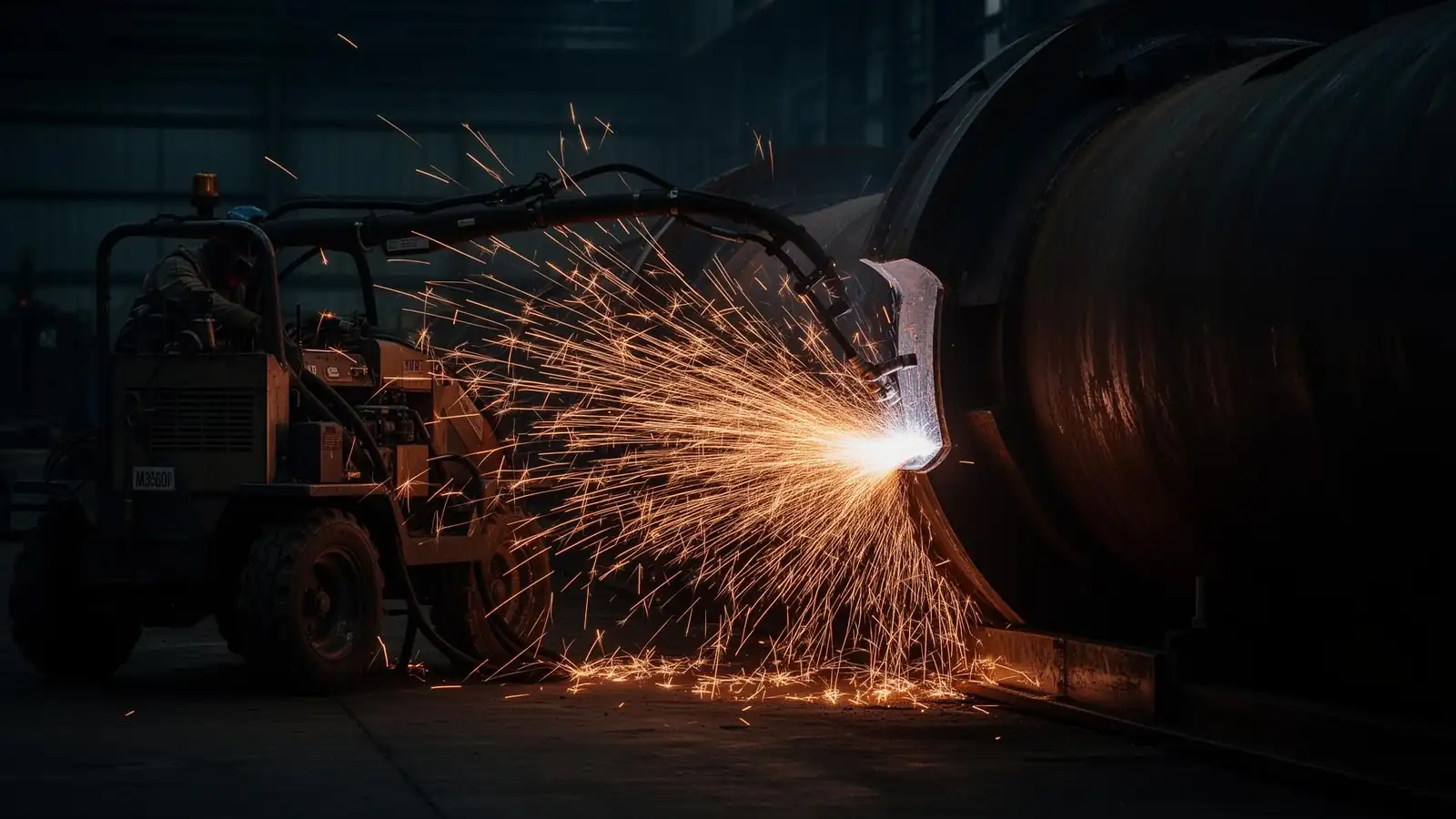
When a hydraulic arm cracks or a bucket tooth mount breaks, your entire operation stops. Every hour that excavator or tractor sits idle costs you money in crew wages, project delays, and missed deadlines. That's why we come to you. Our fully equipped mobile welding rig carries everything needed to repair heavy equipment on-site. No flatbed rental. No teardown and reassembly. No waiting for a shop to squeeze you in.
What We Repair
• Hydraulic cylinder mounts and brackets
• Bucket teeth, cutting edges, and wear plates
• Boom and arm crack repairs
• Frame and chassis weld repairs
• Pin bosses and lug rebuilds
• Track frame and undercarriage repairs
• Custom fabrication for replacement parts We work on all major brands including Caterpillar, John Deere, Kubota, Komatsu, Case, Bobcat, and more.
Common Repairs: MIG vs. Stick Applications
Choosing the right welding process matters for durability and field conditions. Here's how we approach the most common heavy equipment repairs: Excavator Bucket Tooth Rebuilds
Bucket teeth take extreme abuse: impact, abrasion, and constant load cycling. In the field, we use Stick welding (SMAW) with hardfacing rods for fast, reliable rebuilds. Stick handles dirty, rusty base metal better and doesn't require shielding gas that wind can disrupt. For shop-quality precision on pre-cleaned components, MIG (GMAW) delivers smoother, stronger deposits with better penetration control. Hydraulic Thumb Repairs
Thumb cylinders and mounting plates see heavy fatigue stress. We typically use MIG welding here for its superior control on thinner materials and cleaner bead profiles. Proper preheat and multi-pass technique prevents hydrogen cracking in the heat-affected zone. Frame and Boom Crack Repair
This is where expertise matters most. Frame cracks on excavators and loaders are almost always fatigue failures in high-stress areas. Our process:
1. Grind out the crack completely, no bridging over existing damage
2. V-groove preparation for full penetration
3. Preheat the base metal to 200-400°F depending on material thickness
4. Multi-pass Stick welding with low-hydrogen E7018 electrodes
5. Controlled cooling to prevent brittle microstructure
6. Final grinding and inspection This methodology ensures the repair outlasts the original factory weld in most cases.
Our Process
1. You call us at 928-515-2911 or submit a quote request with a photo of the damage.
2. We assess the repair. Often we can give a ballpark estimate from a photo.
3. We arrive on-site with our mobile welding rig, fully equipped with MIG and Stick welding equipment, steel stock, grinding and cutting tools, and generator power.
4. We complete the repair on-site. Most jobs are finished in 2-6 hours.
5. You're back to work. No teardown, no transport, no wasted days.
Built for the Prescott Area
Yavapai County's terrain is hard on equipment. Rocky soil, steep grades, and extreme temperature swings mean more stress on welds and more frequent repairs. We understand the demands of working in this area because we live and work here too. Whether your equipment is on a construction site in Prescott Valley, a ranch in Chino Valley, or a remote dig in Dewey-Humboldt, we'll get to you.
Who We Work With
Our mobile welding rig comes to homes, ranches, and business sites across Prescott and Yavapai County. Commercial clients we regularly work with include:
General contractors and builders
Property managers and HOAs
Facilities and maintenance teams
Restaurants, hotels, and hospitality properties
Ranches, farms, and agricultural operations
Municipalities, schools, and public agencies
What We Take On and What We Decline
We take on structural steel repair, gates and fencing, railings and handrails, trailer and heavy equipment repair, and custom steel and aluminum fabrication, all done on site. We decline copper, brass, brazing, and soldering work, engine and transmission repair, and certified pipe welding.
Preheat, Interpass, and Cooling: Why Procedure Matters
The difference between a heavy equipment weld that lasts 10 years and one that fails in a month is rarely the welder's hand-eye coordination. It is the procedure: preheat, interpass temperature control, consumable selection, and controlled cooling. Preheat: For carbon steel thicker than 1/2 inch, or any high-strength low-alloy steel, we preheat the joint to 200 to 400 degrees Fahrenheit before striking an arc. Preheat slows the cooling rate of the weld and heat-affected zone, preventing the formation of brittle martensite that leads to hydrogen-induced cracking. We measure preheat temperature with contact pyrometers, not by feel. Interpass temperature: On multi-pass welds, we maintain interpass temperature within a defined window (typically 200 to 500 degrees Fahrenheit). Too cold between passes invites cracking. Too hot degrades mechanical properties. Low-hydrogen consumables: E7018 electrodes are kept dry in a rod oven. Hydrogen pickup from moisture is the single most common cause of delayed weld cracking on heavy equipment. Controlled cooling: Heavy structural welds get wrapped with insulating blankets to slow the cool-down. Forced cooling (water, air blast, or shop fan) can ruin an otherwise perfect weld.
Hardfacing for Wear Components
Bucket teeth, cutting edges, and wear plates take continuous abrasion. Standard mild steel wears out fast in this service. Hardfacing extends component life by 2 to 3 times compared to OEM, sometimes more. Our hardfacing approach: We apply a buttering pass of mild steel filler first to manage thermal stress between the base metal and the high-hardness deposit. Then we apply abrasion-resistant hardfacing wire (typically a chromium carbide-based product, 55 to 65 HRC depending on the service environment) in 1 to 3 layers depending on wear severity. Hardfacing is not a one-size solution. The right product depends on whether you are dealing with abrasion (rocky material), impact (breaking concrete or hard rock), or a combination. Tell us what the bucket sees daily and we will match the consumable to the application.
Specializing in MIG, Stick, & Aluminum welding for high-strength steel and iron repairs.
Frequently Asked Questions
Can you weld on heavy equipment without removing it from the job site?
Yes. That is the entire point of mobile welding. Our rig carries everything needed to complete most heavy equipment repairs on-site, including engine-driven welder generator, MIG and Stick processes, oxy-acetylene cutting, and steel stock.
How long does an average excavator boom crack repair take?
Typical boom or stick crack repairs run 3 to 6 hours including grinding, preheat, multi-pass welding, and controlled cooling. More complex structural failures can extend to 8 to 12 hours.
Do you weld on aluminum equipment components?
Yes. We carry a dedicated aluminum spool gun with ER4043 and ER5356 wire for aluminum equipment work. Aluminum welds are kept separate from steel work to prevent cross-contamination.
What brands of heavy equipment do you weld on?
All major brands including Caterpillar, John Deere, Kubota, Komatsu, Case, Bobcat, Volvo, Hitachi, and others. The welding procedure is matched to the actual base metal, not the manufacturer.
Can you fabricate replacement parts when OEM is on backorder?
Yes. When a critical bracket, mount, or pin boss is unavailable, we can fabricate a replacement from structural steel plate or tube to match the original specifications.
Do you offer hardfacing on bucket teeth and cutting edges?
Yes. Chromium carbide hardfacing extends bucket and cutting edge life by 2 to 3 times compared to OEM, often more in heavy abrasion service.
Related Projects
Stick welding repair on an excavator boom in Prescott Valley, AZ
Loader bucket cutting edge weld repair on a job site near Chino Valley
On-site commercial heavy equipment welding in Prescott, AZ
Mobile welding truck arriving for tractor repair in Yavapai County